|
10X , 15X & 20X Laser Beam Expanders - (532nm to 1064nm) - 47mm Clear Output |
 |
|
| DBX-532/1064 laser beam expanders provide a versatile high quality beam expander solution with a large 47mm diameter output aperture and compact optical length down to 97mm.They utilise a three element design corrected for spherical abberation with a design performance of lambda/4. Expansion ratios are 10X , 15X and 20X which can be changed by simply unscrewing the rear attachment and replacing with a different one. The DBX-Base option provides a flat base with M4 and 8-32 threaded holes and the standard inout holder can clamp onto diameters up to 1" (25.4mm). | |||
| Call Us for Assistance | Have a question? Email Us for a prompt reply! | ||
| +1 703 348 8302 (USA) +61 7 5522 5876 (AUS) |
 |
| Part# | (Click Image to Enlarge) | Features & Specifications | Enquiry |
DBX-10X-532/1064 Beam Expander |
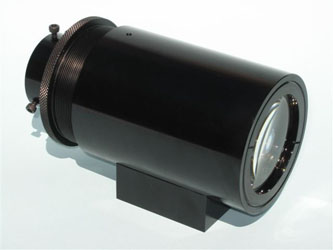 |
|
|
DBX-15X-532/1064 Beam Expander |
|
|
|
DBX-20X-532/1064 Beam Expander |
|
|
|
DBXA-10X |
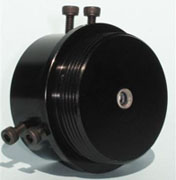 |
|
|
DBXA-15X |
|
|
|
DBXA-20X |
|
|
|
DBX-Base |
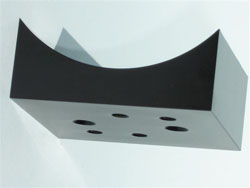 |
|
|
|
Need Laser Safety Eyewear to use with your Laser? Then visit Dioptika-Safety USA or Dioptika-Safety Australia |  |

Laser Beam-Expander Theory Laser
beam expanders are designed to either decrease the laser's beam spot
size at large distances or produce a larger
diameter
This equation is an approximation for the collimated output beam size at a given distance. In
addition, an expanded beam can yield smaller spot sizes when used in
combination with additional focusing optics. This is very useful DiOptika’s
beam expanders are of the Galilean type. The advantages of the
Galilean design over the Keplerian is that it contains no internal |
|
YAG Laser Beam Expanders, Red Laser Beam-Expanders , Green Laser Beam Expanders , NIR Laser Beam-Expanders , MID & Far IR Laser Beam Expanders , Zinc Selenide Laser Beam-Expanders , UV Laser Beam Expanders and customer laser beam expanders. 248nm - 355nm Laser Beam-Expander , 532nm - 1064nm Laser Beam Expanders , 1300nm , 1550nm , 1700nm Laser Beam-Expander , 3-5um & 10,600nm Laser Beam Expanders , Galilean Beam Expanders. We also offer a custom design of optical systems for use with laser systems. Dioptika Safety provides an extensive range of DiOptika laser safety eyewear covering almost all laser types that can ship anywhere in the world. Laser Safety Eyewear includes: telecom laser safety glasses , Nd:YAG laser safety glasses , Alexandrite laser safety glasses , Nd:YAG Harmonics laser safety glasses , IPL safety glasses , HeNe laser safety glasses , CO2 laser safety eyewear , Argon laser safety goggles , stainless steel patient blockout eyewear , Erbium laser eyewear , Dye laser spectacles , Ruby laser goggles , red and green laser protective eyewear. Other types are availble on request. On this site you will also find general laser safety information resources about the laser safety regulations for most counties around the world.
|